

Published on: 12/10/2025


Description
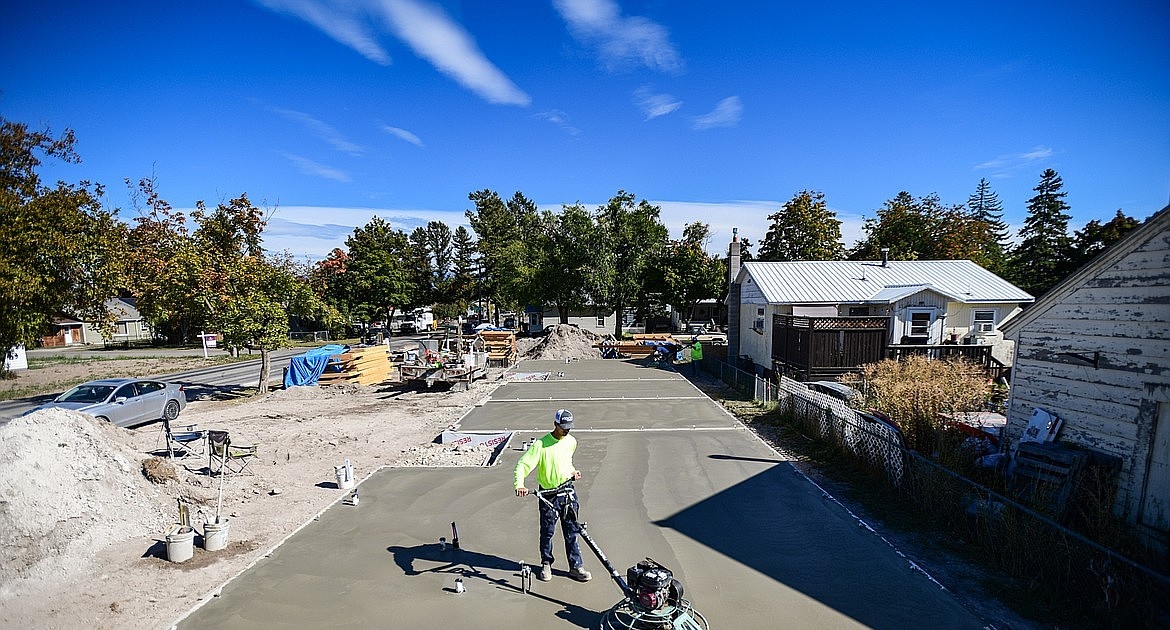
Habitat for Humanity of Flathead Valley director MaryBeth Morand told Whitefish City Council last week that the nonprofit needs more property in order to build more homes.
Habitat has built 73 homes in the valley since 1989. Currently, four houses are under construction, and the organization will break ground on six more homes next spring.
Five homes have been built in Lakeside and five in Somers, 28 in Kalispell, 29 in Columbia Falls and six in Whitefish. The agency now builds five to eight homes per year.
“We just had a five-year strategic planning session with the board of directors, and we’re committed to a pipeline of 40 houses by the end of the year of 2030,” Morand said. “Our biggest hurdle in building more is land. We’ve got the capacity, and we can do it, but we need land.”
Habitat bought a little over 21 acres near Four Mile Road in Kalispell but won’t be able to build there for a few more years due to the infrastructure and planning required. Habitat is partnering with two private sector builders for the project, called Birchwood.
“We serve 30% - 80% of the area median income, and that’s actually maybe a little bit more than you’d think right now,” Morand said. “I think this is really dipping into the middle class.”
Eighty percent AMI for a two-person household is $61,800. She noted some average salaries for jobs in Flathead County, according to the 2025 Bureau of Labor Statistics.
“Health care support jobs are $38,000; farming, fishing, forestry $43,500; office admin $43,600 per year; police and fire $56,500; education/library $56,900 and construction $58,900,” she said. “There are a lot of people who are eligible for Habitat for Humanity homes.”
Other eligibility requirements are a good credit score and a minimum of 275 hours of sweat equity, which is working on one’s own house or another Habitat house for one day a week. Applicants must also demonstrate a need for better housing.
Morand said the sweat equity part helps to build community and is one of the “nicest things” about the Habitat model.
“The last three houses we’ve closed on have been in partnership with the Northwest Montana Community Land Trust,” Morand said. “We wanted those houses to be as inexpensive as possible because the land trust has first right of refusal to buy them back when the homeowners want to move out.
“If we sold a house to someone for $300,000 this year and in 10 years, that house appraises for $400,000 ... then that family can only keep 25% of the equity,” she said. “That’s exactly the same formula the land trust uses because we want the land trust to buy all of our houses.”
The partnership with the land trust keeps the cost of the homes under market rate continually.
Morand said two townhouses and a single-family home which recently closed in Columbia Falls were built on land trust land and closed for under $320,000.
Habitat construction manager Garrett Roberson said all of the homes are built with pre-built walls they make in the shop in the Restore building.
“We do not build the most affordable homes possible,” Roberson said. “Our homes are extremely energy efficient. We want our homes to be sustainable for our homeowners and also sustainable for longevity.”
Habitat for Humanity of Flathead Valley also operates Restore, a place to find building supplies, furniture and appliances in southern Kalispell. Since 2001, the store has recycled 4,000 truckloads of items that would have gone to the landfill.
“I think it’s wonderful for people who, if their refrigerator breaks and they don’t have $1,000 or $1,200 to go buy a new refrigerator, they can come to the Restore and buy one for 125 bucks,” Morand said.
“We think about the dignity of the people who volunteer with us, the people who live in our houses, the people we work with. It’s just a wonderful model,” Morand said, noting the generosity of the community and companies donate things like cement or granite countertops, or give deep discounts. “It just brings people from all different sectors of our society and our economy together to work on something together.”
THE COUNCIL BRIEFLY addressed a letter from Lucas Foust, the lawyer for the Glacier Twins alumni, regarding the Glacier Twins lease at Memorial Park. Foust expressed concerns about “what appear to be some dubious practices related to the Twins’ use of taxpayer money.”
The Glacier Twins organization has had exclusive use of the stadium at Memorial Park since 2002, when it entered into a lease agreement with the city. The two parties later agreed to disburse the funds received from Verizon to the Twins for maintenance of the stadium.
“The Glacier Twins actually receive, I believe, 78% of the income that we receive from Verizon, so it’s roughly about $20,000 and that goes into their maintenance of Memorial Field,” City Attorney Angela Jacobs said.
In Foust’s letter, he lists the upgrades the Twins claim they have made with dollar amounts, including grass turf and infield mowing at $65,000 and physical plant maintenance at $11,000.
“We expressed our deep concerns about these figures as they total $128,000 and how they could possibly be justified,” Foust wrote.
He said he requested a copy of the Twins’ books to account for $200,000 of taxpayer money but his “efforts have been stymied.”
Foust requested the city of Whitefish make the same request of the Twins’ organization.
At the last Council meeting, Councilor Andy Feury said he found the Twins “super delightful” to work with and not deserving of most of the criticisms they’d had this year.
Councilor Steve Qunell said the letter from Foust sounded counter to what Councilors Frank Sweeney and Feury said at the last meeting.
“I guess the nicest thing I can say -- it is certainly inconsistent with the facts that we’re aware of,” said a tight-lipped Sweeney.
Feury added, “I would concur with that assessment.”
With an assortment of knowing nods shared across the council, the issue was dropped.
Whitefish City Manager Dana Smith announced she was heading to Las Vegas over the weekend to “marry my best friend, and I’m beyond excited.”
Mayor John Muhlfeld read the annual proclamation declaring the last Friday in April as Arbor Day.
News Source : https://whitefishpilot.com/news/2025/dec/10/habitat-for-humanity-evolving-and-building/
Other Related News

12/10/2025
For 25 years Reecias Salon and Spa has been a staple in the Whitefish beauty and wellness...

12/10/2025
Glacier and Flathead high schools secured the top two placements in Class AA at the Weste...
12/10/2025
A Libby family affected by mercury exposure earlier this year is getting a helping hand f...

12/10/2025
Evergreen Fire Rescue will be hosting its 15th annual luminaria display on Wednesday Dec ...

12/10/2025
The annual Wreaths Across America celebration at the Montana Veterans Home takes place on...

Follow


Download Our App


Copyright 2023 © Meet Montana. All Rights Reserved