

Published on: 12/31/2025


Description
What is the best shot?
“I always say it’s my next shot,” said Whitefish photographer Tony Gangemi. “I have thousands of favorite shots, but you’re always looking for that better photo.”
The next best shot might not come in 2026, but in three or four years, when a rare loon might return home.
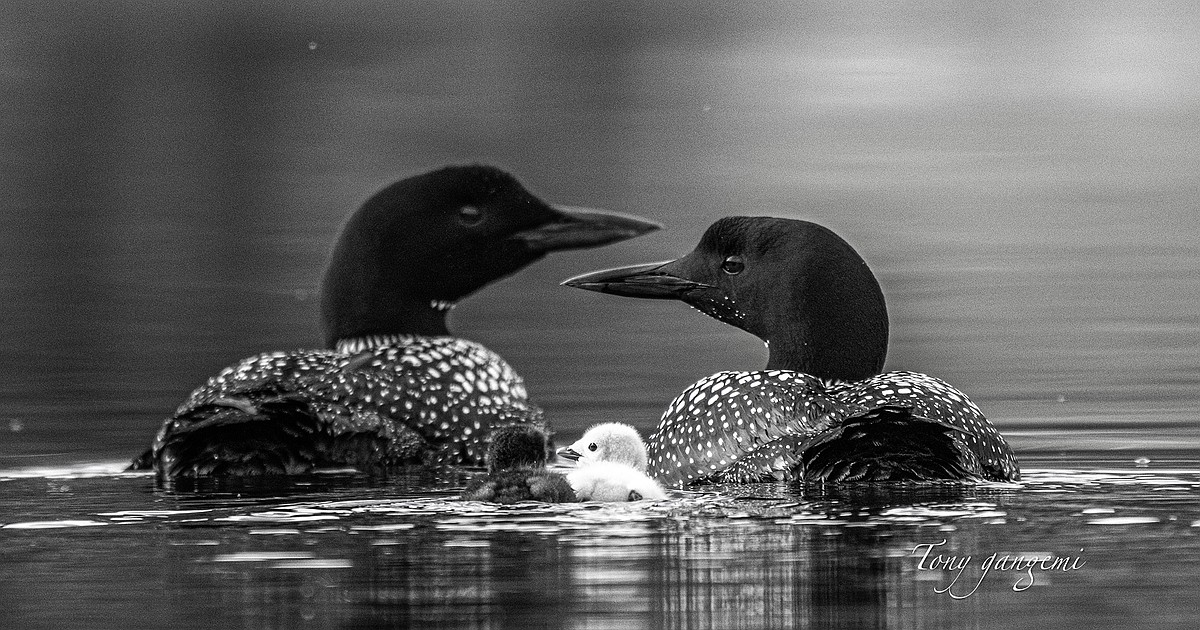
Gangemi was kayaking at a nearby Northwest Montana lake this spring when he “clued in” to one particular family of loons.
“Something was a little different,” he said. “I knew right away, this is very rare. It stood out on the lake, this little cotton ball floating on the water.”
It was a leucistic loonlet.
The bird was a baby common loon with a rare genetic condition called leucism, which is similar to albinism in that it reduces pigmentation but retains sparse color, seen in darker eyes and faint, grey traces of typical feather patterns.
Leucism is estimated to occur in about one in 30,000 birds. An already dark-feathered bird by nature, the odds are even less for the common loon.
“So I just kept going back to this lake,” Gangemi said. “I knew this would go somewhere.”
Gangemi spent over 300 hours this year at this one lake and has over 10,000 photos of the loonlet’s family.
Gangemi works overnight with the city of Whitefish. It’s a fitting job where things are quiet and predictable, requiring janitorial tasks like cleaning, and removing snow from the top deck of the city’s parking garage.
Forgoing much sleep, he then has the dawn and early day hours to himself, and the birds.
In the warmer months, he’d head straight to lake after work. Somedays, it would be so foggy you couldn’t see 2 feet, which would produce photos with a different kind of artistic value, he said.
“Some days I would get a ton of photos. Somedays I would come home with nothing,” he said.
He watched the young loonlet ride its parents back. He watched it grow larger and captured images of its juvenile plumage slowly falling off.
By the end of the summer, the loon had transformed, resembling more of a seagull, he said.
Throughout, he worried about eagles and other predators spotting the bright bird.
“I saw them out, flying by, and the mom would go berserk. And the dad, his head would cock up sideways. They know it’s up there.”
Gangemi is no stranger to bird behavior.
He picked up his first camera around 1985 and took photos of his friends skiing while living in Steamboat Springs. That, plus one ski season shooting on Big Mountain, was enough of humans for him.
“Eagles, osprey, sandhill cranes, owls, hummingbirds... birds are my thing. Anything else, except humans,” he said.
Birds present an evolving, moving challenge, he said.
“Birds are my therapy. I shut everything down and just enjoy watching the birds.”
WHEN HE knew the loonlet was special, he contacted Montana Fish, Wildlife and Parks, who came out and banded it.
By the end of August, the loon and all of its family members were gone.
Loons migrate to coastal areas for the winter, traveling up to about 3,000 miles. It is likely the leucistic loon is somewhere on the Pacific Coast.
The enduring birds live 25 to 30 years. They are known to return to their home breeding grounds in two to four years.
According to Montana Fish, Wildlife and Parks, loons are a species of concern, and the biggest threat is human disturbance. Shoreline development, recreation and human-caused water level fluctuations can cause the loss of adequate nesting habitat.
Other threats include ingesting lead from fishing lures, getting tangled in discarded fishing line, and mercury exposure.
It’s also crucial that the loon’s home lake — which Gangemi prefers not to name — remains pristine. Loons are picky, requiring freshwater lakes at least 5 acres in size and at 5,000 feet in elevation or lower. Their territories must have clear water and minimal disturbance.
Beyond all the normal threats, the leucistic loon will also have to survive in the wild as a bright beacon.
If and only then, in a few years, will the loon return home. And if they do, Gangemi will be there, peacefully keeping a distance, waiting for the next best shot.
For more information on Gangemi’s work, visit www.gangemigraphics.com.
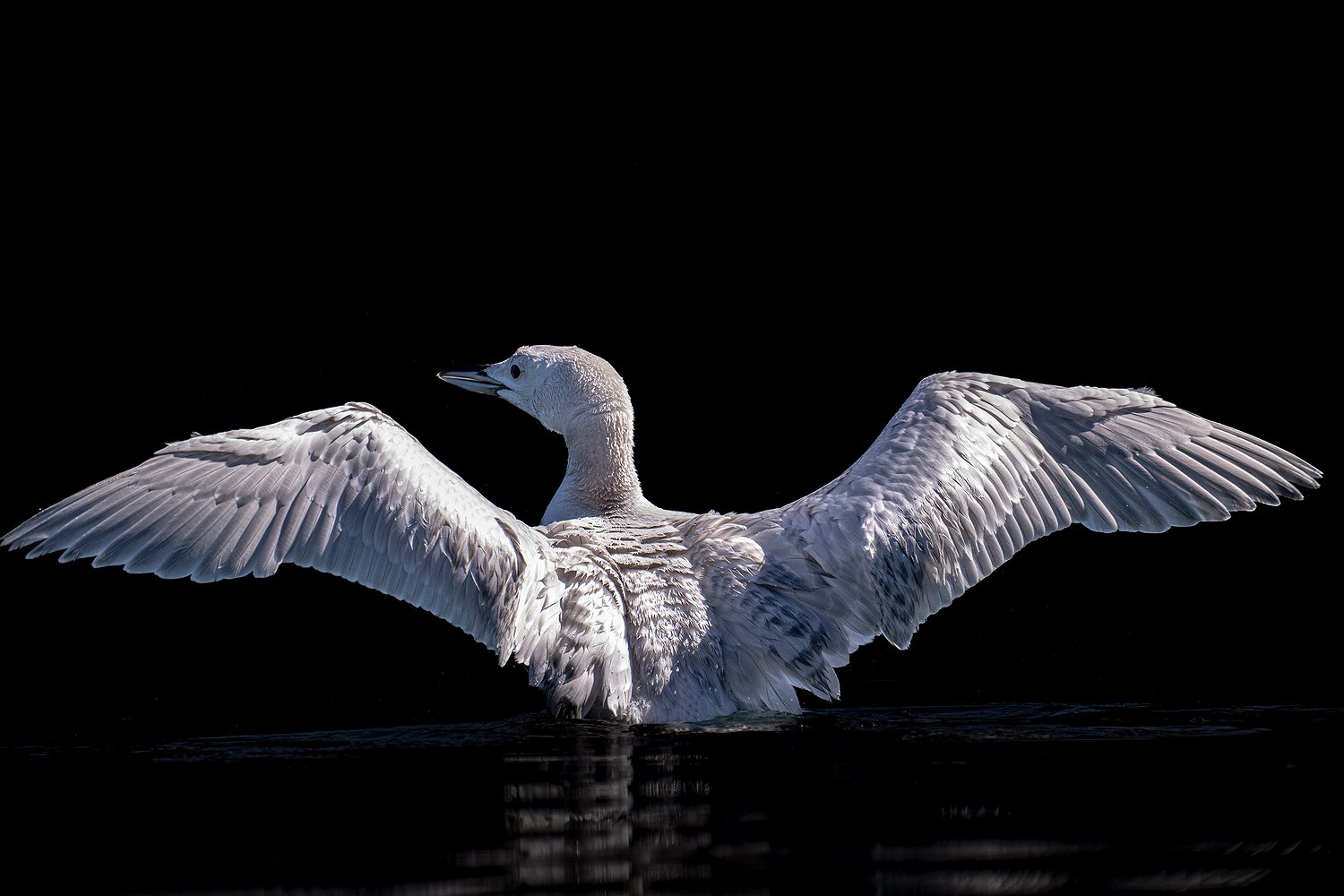 The leucistic loon on Aug. 20, photographed by Tony Gangemi. (Gangemigraphics.com)
TONY_GANGEMI
 The leucistic loon on Aug. 8, as photographed by Tony Gangemi.
TONY_GANGEMI
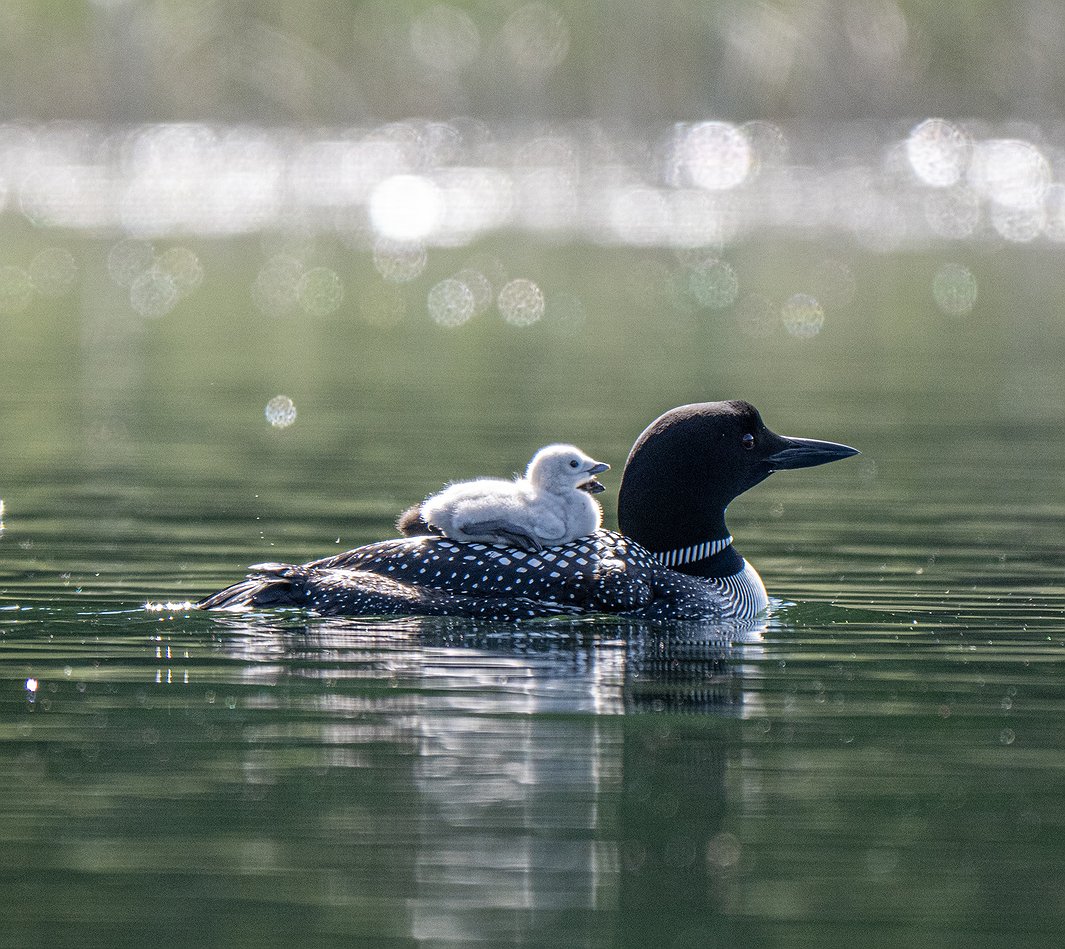 The leucistic loon in May as photographed by Tony Gangemi.
TONY_GANGEMI
News Source : https://whitefishpilot.com/news/2025/dec/31/rare-leucistic-loon-the-bird-of-a-lifetime-for-whitefish-photographer/
Other Related News

12/31/2025
2025 was a busy year in Whitefish Housing food and job insecurity affected the community ...

12/31/2025
A group of citizens is petitioning for stronger lake and lakeshore protections while reki...

12/31/2025
The Columbia Falls City Council has passed a law that makes it a crime to expose minors t...
12/31/2025
Beginning construction of a new detention center will be the focus for Flathead County of...

12/31/2025
The West Glacier KOA was closing for the season a major snowfall was forecasted and the m...

Follow


Download Our App


Copyright 2023 © Meet Montana. All Rights Reserved