

Published on: 12/04/2025


Description
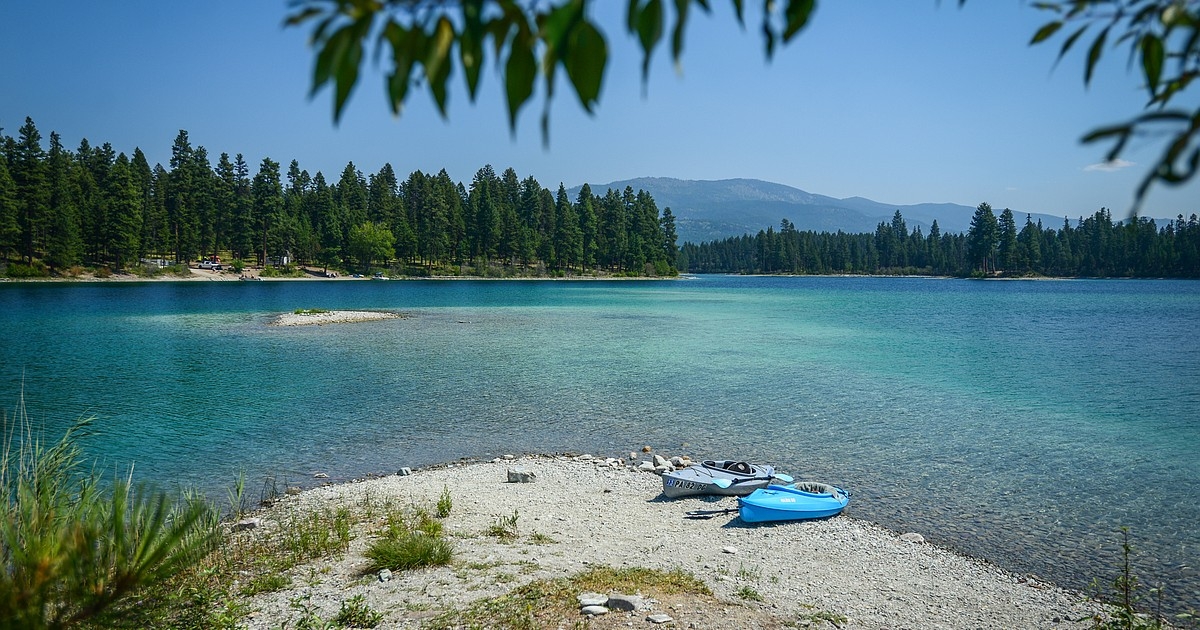
Brad Helding knows Crystal Lake like the back of his hand.
His parents purchased property on the shoreline in the 1950s, when the Thompson chain of lakes was still a remote islet in a sea of working timberlands. Since then, the 69-year-old Kalispell resident has spent countless summer afternoons on the water, fishing rod in hand. In autumn, he roams the forests that surround his parents’ cabin, hunting for deer.
“That’s all I’ve ever known is that place,” said Helding.
It makes sense, then, that Helding was one of the first residents to notice the change in the lake’s water level, about 15 years ago.
“The water kept going down and down and down, and it’s still going down,” said Helding. “I’ve never seen it like that.”
Crystal Lake has no inlets or outlets. Water instead bubbles into the basin through a mazelike network of underground fissures. Little is known about this aquifer, though it likely supplies water to eight of the 18 lakes in the Thompson chain as well as dozens of homes and properties in the area.
A new project funded by the American Geophysical Union and headed by the Thompson Chain of Lakes Stewardship Coalition seeks to unravel the complex interactions between groundwater and surface water resources in the area and dredge up an answer to the question Helding and many other longtime residents have been asking for upward of a decade: Why is the water level in Crystal Lake declining?
The answer can’t come soon enough for Karen Wickersham, chair of the Thompson Chain of Lakes Stewardship Coalition. Like many members of the group, Wickersham grew up visiting the Thompson chain of lakes. She and her husband purchased a cabin on Crystal Lake in the 1980s, before the water level started to decline.
In the past 10 years, Wickersham estimated that the shoreline of Crystal Lake has dropped by more than 25 feet in some places.
“We don’t know the why, but we certainly know the what,” she said of the change.
Some neighbors have already extended docks to maintain access to the lake, and Wickersham said she worries about the impacts the dwindling water supply could have on wildlife, including the loon populations the Thompson chain of lakes is known for.
Most of all, she worries that her tap will run dry. It already happened once, earlier this year. The well that had reliably supplied Wickersham’s cabin with drinking water for 55 years dried up. A new well was drilled, but Wickersham said she is unsure how long the new supply will last, especially if the water table in the area continues to decrease.
About a dozen other wells around the lake have run dry in recent years, according to Wickersham. There is no public water supply in the area, so homeowners have to shell out the cost for drilling a new well. Many of the homes that don’t have personal wells use pipes and filtration devices to draw drinking water directly from Crystal Lake.
Wickersham had some ideas about what might be causing the decline in the water level. Drought had been a consistent theme in weather reports over the past decade, and Wickersham wondered if increased development in the area could also be straining some water resources.
Untangling exactly how each of those factors impacted water levels would require a deeper understanding of the hydrology that occurred below ground.
AQUIFERS CAN be fickle, especially in areas like Northwest Montana that boast variable topography. Different types of rocks and soil illicit different behaviors in groundwater —some aquifers feature fast-flowing underground streams while others are characterized by near-stagnant pools that hold onto the same water for centuries. Some have porous soils that allow for a quick recharge during rainfall events, while others are slow to fill.
Such details remain undiscovered for many of the aquifers that underly Northwest Montana. In 2018, the Montana Bureau of Mines and Geology initiated a study to characterize groundwater resources in Lincoln and Sanders counties as part of the state’s Ground Water Assessment Program.
Reports and maps from that project have focused on the most populous areas of the counties, including the Tobacco Plain, Lower Clark Fork and Kootenai River. While some products are still under review, a detailed assessment of the Thompson chain of lakes area, including a groundwater flow map, is not expected to be included.
The Thompson Chain of Lakes Stewardship Coalition plans to use grant funds from the American Geophysical Union to hire a professional hydrogeologist. The researcher will analyze available groundwater data, identify information gaps and conduct supplementary tests to determine the aquifer’s flow patterns, recharge rate and storage capacity.
The main goal is to learn how, exactly, water flows into Crystal Lake.
“We’d love to understand the interaction between these spring fed lakes and snowpack, rainfall, the drought and how climate is affecting that,” said Jennifer Nelson, vice chair of the Thompson Chain of Lakes Stewardship Coalition. “We just don’t know any of that so there’s a lot to be learned.”
The study will be completed in early 2027. The coalition plans to share results and final products with the Lincoln County Board of Commissioners and other local governing authorities, so the information can be used to inform future permitting and development decisions.
When Helding’s parents built the house on Crystal Lake in 1959, only 335 wells had been drilled in the entirety of Lincoln County. Now, more than 8,500 wells tap into groundwater resources beneath Montana’s northwestern-most county. About 1,400 wells were added in the last decade alone, according to data from the Montana Bureau of Mines and Geology.
That sort of growth is inevitable, said Helding. But he wants local authorities to have the best available science when they make decisions, especially when it comes to water issues.
“We’re drinking this stuff, using it to cook with, bathe with and also recreating on it,” said Helding. “As far as I’m concerned, it’s the basis of all life.”
Reporter Hailey Smalley can be reached at 758-4433 or [email protected].
News Source : https://dailyinterlake.com/news/2025/dec/04/local-nonprofit-begins-deep-dive-into-thompson-lakes-aquifer/
Other Related News

12/04/2025
The 40th annual Night of Lights Parade and celebration is Friday night in Columbia Falls ...
12/04/2025
The anticipated new contract terms have sparked fears in some long time concessionaires ab...
12/04/2025
A new visitor pass program is available for people without airline tickets who want to me...
12/04/2025
Chris Krager is no longer serving as executive director of the Samaritan House in Kalispe...

Follow


Download Our App


Copyright 2023 © Meet Montana. All Rights Reserved