

Published on: 01/22/2026


Description
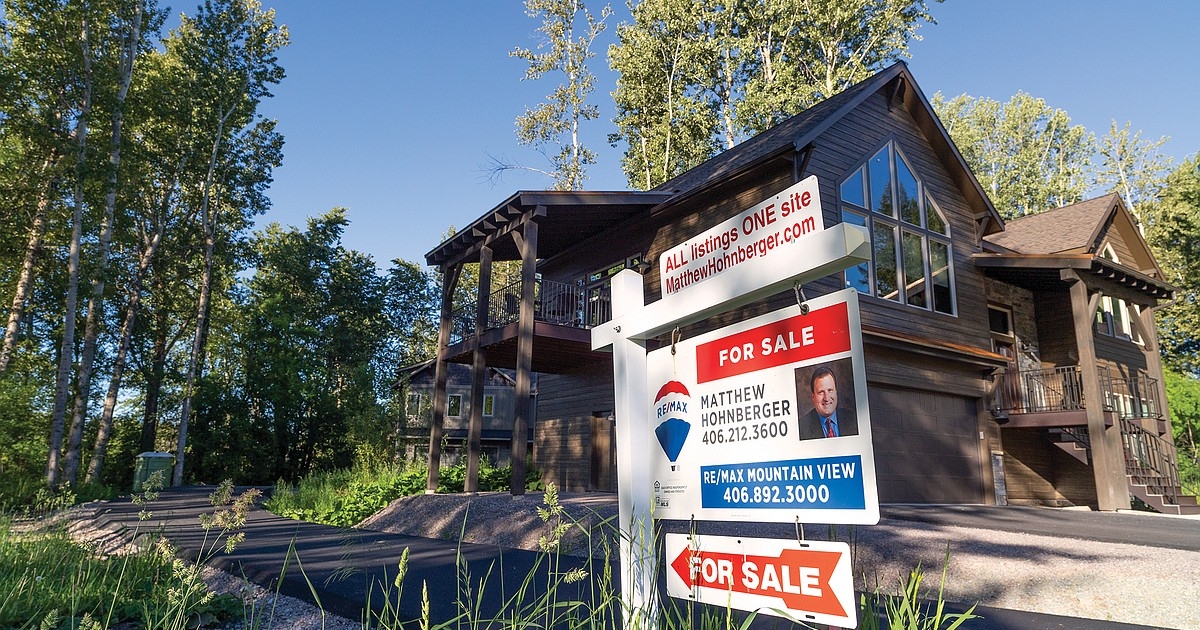
Three prominent Republicans filed a lawsuit Wednesday asking a judge to invalidate one of the two bipartisan bills that reduced 2025 property taxes for many Montana homeowners. They argue the legislative sausage-making that brought the bill to the desk of Gov. Greg Gianforte last year violated procedural requirements in the state Constitution.
The three plaintiffs are Senate Taxation Committee Chair Greg Hertz, R-Polson, Senate Majority Leader Tom McGillvray, R-Billings, and former state Sen. Keith Regier of Kalispell, the father of Senate President Matt Regier. Hertz and McGillvray were part of a faction of legislative Republicans who opposed the legislation. All three say in their court filing that it increased their 2025 property tax bills or will raise their 2026 tax rates.
“I’ve heard from many of my constituents who are suffering from the tax shift these bills created,” Hertz said in a Wednesday statement announcing the lawsuit. “Lifelong Montanans are struggling to figure out how they’re going to afford to pay their massively increased property taxes, and many will likely have to resort to selling their homes and cabins that have been in their families for generations.”
If successful, the court challenge could yank the state back to its 2024 tax system, reversing changes that cut tax bills for many property owners and raised them for some others last year — and likely propel the Legislature into another round of politically fraught tax debates when it meets in 2027.
The two intertwined property tax bills passed by the Legislature in 2025, Senate Bill 542 and House Bill 231, sought to rework the state’s property tax system to offer relief to comparatively modest residences by raising taxes on higher-value homes and business properties. Starting this year, the legislation also applies higher tax rates to second homes, Airbnb-style short-term rentals and other properties that aren’t being used as principal residences.
The general policy approach was championed by Gianforte, a Republican, during his 2024 re-election bid as a response to widespread angst over years of rising residential tax bills driven partly by rapid increases in Montana home values through the COVID-19 pandemic. Proponents argued that pushing higher tax bills on luxury properties and second homes, which are often owned by nonresidents who don’t pay Montana income taxes, is a fair way to provide tax relief for middle-class homeowners without forcing cuts to property tax-funded local government services such as schools and law enforcement.
As specific implementation details were debated by last year’s Legislature, though, the prospect of lowering taxes on some taxpayers by raising them on others split Republicans, drawing vehement ire from the party’s right wing.
The tax legislation’s architect, Conrad Republican Rep. Llew Jones, overcame that opposition by working with minority Democrats, ultimately shepherding the two bills through the Legislature with bipartisan support. Procedural maneuvers he employed along the way, however, drew condemnation from the policy’s opponents during the session and now form the basis of the new lawsuit.
At a point in the legislative session where HB 231, the initial implementation bill, appeared to be stalled by its opponents, Jones worked with other lawmakers to clone most of its provisions into SB 542, which had passed the initial stages of the legislative process as a largely unrelated property tax measure. As part of that rewrite, Jones and his allies added provisions allocating $90 million for $400 property tax rebates in what he acknowledged during a committee hearing was an effort to draw additional support.
The plaintiffs, represented by former Republican lawmaker Matt Monforton, are seeking to overturn SB 542 on the basis that they believe those actions violate two provisions of the 1972 Montana Constitution: a requirement that bills aren’t fundamentally altered mid-process to change their original purpose and another that non-budget bills address only a single subject.
“SB 542’s supporters did exactly what the Constitution forbids,” the plaintiffs write in their court filing. “They took a dying, 40-page property tax rate restructuring bill — one that the House Speaker himself called a ‘Frankenstein’ bill — and bought its passage by bundling it with an appropriation for $90 million in one-time cash rebates.”
Montana courts have occasionally invalidated bills for violating the state Constitution’s procedural guardrails. A 2021 campaign finance bill sponsored by Hertz, for example, was successfully challenged over last-minute additions that regulated judicial recusals and political activity on college campuses.
The new property tax case, filed in Gallatin County District Court, doesn’t ask the judge to invalidate HB 231, the initial implementation bill, which contains similar language but was largely superseded by the challenged sister bill. As a result, it’s difficult to say what the effect on taxpayers would be if the lawsuit is successful, though Hertz said in a Wednesday interview he doesn’t think any outcome will claw back rebates or require tax officials to recalculate last year’s tax bills.
“I can’t imagine a judge is going to require rebates to be pulled back and so forth,” Hertz said.
Instead, Hertz said he hopes that the court will ultimately order Montana back to its 2024 tax code starting this year, teeing up an opportunity for the 2027 Legislature to take another crack at fixing the property tax system with approaches he considers better legislation. He also says he hopes a court ruling will discourage future legislators from playing fast and loose with constitutional procedural requirements.
Jones argued Wednesday that the homeowner rebate was integral to the overall legislation because it was administered in a way that helped state tax officials compile a list of homes that should qualify for preferential tax treatment as primary residences. He also said that the case could result in higher tax bills for many property owners.
“This puts at risk a whole lot of average Montanans that are a whole lot better off,” Jones said.
Gianforte’s office made a similar argument in a statement provided by spokesman Sean Southard Wednesday.
“If Senate Bill 542 is struck down, property taxes for Montana homeowners will increase significantly,” the governor’s office said.
Figures produced by the Montana Department of Revenue indicate that last year’s tax code changes saved median homeowners hundreds of dollars a year in most of the state’s 56 counties. The department also estimated that homes worth less than $1.7 million typically benefited from lower effective rates as a result of the legislation — though many lakefront homes and other high-value properties have seen their bills increase.
The lawsuit’s complaint says that the annual tax bill on Hertz’s principal residence, for example, increased from $14,000 to $21,000 a year — a 50% increase — “as a direct result” of the tax legislation. State records indicate the property, on the shore of Flathead Lake outside Polson, was valued at $2.9 million in 2024.
The complaint says that the other two plaintiffs, McGillvray and Regier, both own cabins that will be taxed as second homes starting this year. State property records indicate that those properties are valued at $549,000 and $1.1 million, respectively.
Hertz said Wednesday that he has solicited donations to cover the cost of the litigation, routing them through a 501(c)(4) political committee. An email obtained separately by MTFP indicated that he had estimated the cost of the litigation at $25,000 to $50,000 and that the donations would be routed through Montana Policy Action, which Montana business filings indicate is managed by Republican political strategist Jake Eaton.
Hertz declined to share the names of the lawsuit’s financial backers Wednesday, saying some of them were concerned about retribution.
News Source : https://dailyinterlake.com/news/2026/jan/21/lawsuit-challenges-montanas-second-home-tax/
Other Related News
01/22/2026
Kalispell City Council on Monday night selected father and lawyer Dustin Leftridge to rep...
01/22/2026
A 34-year-old is facing a felony charge in Flathead County District Court after allegedly...
01/22/2026
Lincoln County officials have started the permit process to reconstruct Lower Granite Cre...

01/22/2026
Walk into The Great Northern Bar and Grill and youll see a sign of Al Tays face on the wa...
01/21/2026
The boil water order for Libby has been liftedThe announcement came from City Administrat...

Follow


Download Our App


Copyright 2023 © Meet Montana. All Rights Reserved