

Published on: 12/28/2025


Description
Sometimes, after an especially demanding winter workout, panting with a pounding heart rate, it can be difficult to unlatch boot buckles or dig car keys out of a pack. Imagine having to aim a rifle and hit a target in this condition. Seems impossible, yet biathletes manage it, and the very best make it look easy.
What is biathlon?
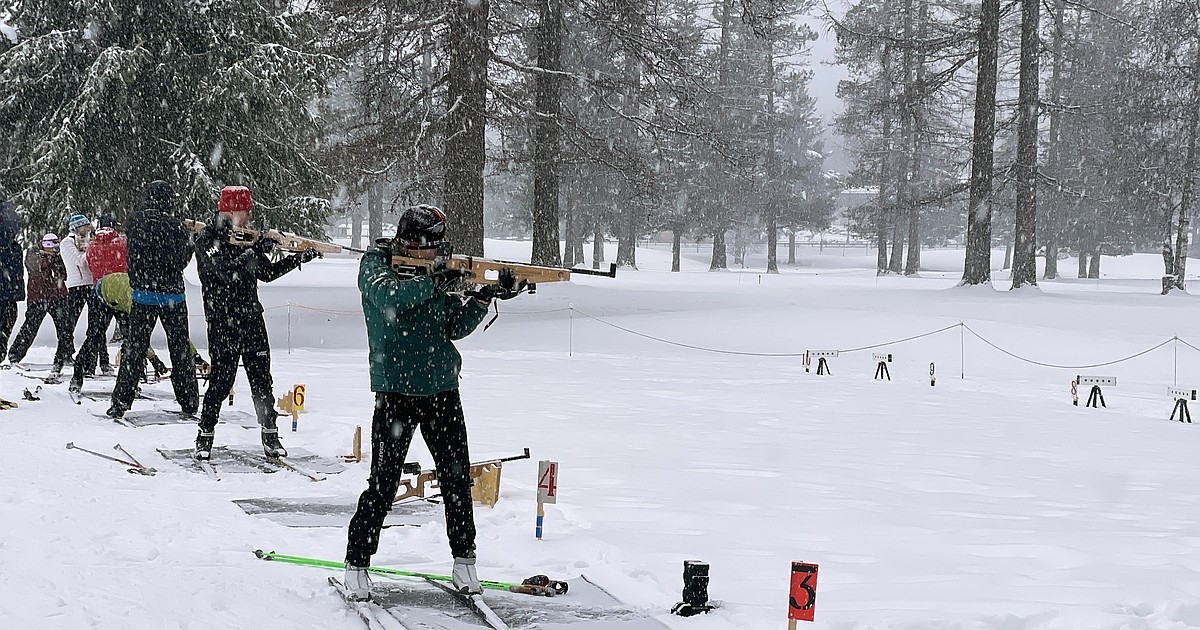
Biathlon is a sport that combines cross-country ski racing and marksmanship. Competitors ski several kilometers with a rifle on their backs, enter a range where they shoot at five small, round targets 50 meters away, then continue to ski.
Races vary in length, but the format, basically, is to ski, shoot prone (lying down), ski, shoot standing, ski.
Although the sport is new to many in the United States, in Europe, biathlon is wildly popular and crowds of 20,000 are not uncommon at the World Cup level. Now, anyone can give the sport a go in Whitefish.
The Glacier Nordic Club started to build a program in the Flathead Valley three years ago, by partnering with Flathead County 4H Shooting Sports to use air rifles. They transitioned to laser rifles for their pilot program, as U.S Biathlon came into the picture.
Last winter, U.S. Biathlon piloted a Laser Biathlon Training Program in three Nordic communities, including Whitefish. U.S. Biathlon loaned Glacier Nordic 10 laser biathlon rifles, targets, shooting mats and rifle supports.
U.S. Biathlon Director of Sport Development, John Farra, visited last season and was impressed by the program, led by Glacier Nordic Club Executive Director Jennie Bender and Head Prep Team Coach Ed Visnovske.
"Flathead Valley is perfect for this program," said Bender. "We're wanting to build the winter recreation community and gauge interest around biathlon, and so far, our youth programs are almost full. We also have adult programs, and people have been very excited about trying out the sport.”
This winter a grant from the Whitefish Community Foundation and a match from U.S. Biathlon Association, enabled the club to purchase five of their own rifles. USBA gave them another five to use for their programming.
The laser rifles allow training to be safer and less expensive. They look and feel like regular biathlon rifles, but there are no bullets, loud noises or serious safety concerns associated with actual rifles. For now, youth participants are not skiing with the rifles; they remain on the range. For the advanced adult programs, adding the complexity of skiing with the rifle adds yet another great challenge.
Still, Bender stresses gun safety.
Biathlon stems from having a military background -- of strict regimented protocol and processes,” Bender said. “We plan to implement the same education and gun safety through our programs."
Anyone who handles the laser guns is instructed to treat them as if they were a live fire gun. Practices are at the Whitefish Lake Golf Course, so it’s possible a passerby might glimpse a skier practicing with them.
“I think it's important for people to know that if they do see these, do not worry. They are not live fire rifles,” Bender said. “Even if you pointed the laser somewhere it shouldn't go by accident, it will do no harm.
“They're really nice laser rifles, and they're really close to actual biathlon guns,” she added.
For those interested in giving biathlon a shot, Glacier Nordic offers programs for youth and adults.
Skiers aged 10 to 18 should be enrolled in a Glacier Nordic Ski Team before adding biathlon training, so they have a base of skiing. The biathlon program involves more shooting than skiing, so it’s important to spend time practicing skiing elsewhere.
Glacier Nordic offers several one-off clinics to introduce adults to the sport, and a more intensive five-part series, the Biathlon Builder Program. Both begin Jan. 10 at the Whitefish Lake Golf Course or Dog Creek Lodge and Nordic Center, depending on snow conditions.
All programs prepare participants for races in February -- the Glacier Meltdown Laser Race Feb. 15 at Dog Creek Lodge and Nordic Center, and the Seeley Lake Biathlon Race on Feb. 7.
Bender and Visnovske urge everyone interested in biathlon to go to the Seeley Lake event, even first-time biathlon competitors.
“I highly, highly suggest going to that,” Bender said. “They have live fire rifles that they have on range and so you can shoot at real targets with real biathlon guns and it's super fun.”
Currently In Montana, aside from the program in Whitefish, there is a small program in Libby, a shooting range in Seeley Lake and a high-level facility in Bozeman.
SPEAKING AS a former elite biathlete, Bender said the sport requires hours of practice, mental training and breath work until shooting is second nature.
“Biathlon training demands a lot of time with your gun,” she said. “Athletes do a lot of dry firing, which is standing in the living room, holding your rifle and just staring at a dot on the wall through the sights while practicing stability.”
Even with hours of practice, other factors can affect an athlete’s performance.
“There are so many variables that you can't control,” she said. “Even just the smallest thing, such as if a slight breeze picks up when you're shooting, can change your chances.”
Therein lies another part of the appeal of the sport – in cross country skiing, Bender said it is often possible to guess the top ten racers, but in biathlon, competitors can go from 40th place to 5th place.
The specialized .22 rifles, at the high levels, are custom-fit to the athlete’s body – wingspan and torso length.
The targets look like a rectangular box with five circles and are 50 meters away. The diameters of the targets are just under two inches for prone shooting and about 4 inches for the more difficult standing position.
“It's a really perfect crossover,” Bender said. “Not only is biathlon a really interesting sport to watch, I know a lot of people who don't engaged with cross country skiing at all, but comment on how they watch biathlon in the Olympics.”
Bender is excited to bring the sport to the Flathead and begin building a community with proper building blocks, including rifle safety and proper technique.
VISNOVSKE ENJOYS seeing the kids come to practice, directly from school, distracted and preoccupied, and physically transform when they become calm and focused during biathlon training.
"You see them lock in and just focus on the target, focus on their breathing, get really quiet, and, when they do, well, it's just such a cool thing to see,” he said. “It applies to so many other parts of life, like in the middle of basically chaos, can you focus? Can you become quiet internally?”
Biathlon training with Glacier Nordic teaches the skill set required to become calm and focused. Visnovske, who came to biathlon with a background in law enforcement and Nordic skiing, calls biathlon “the great equalizer.”
“You have to be able to ski and you have to be able to shoot. But you don't necessarily have to be the best at both of those,” Visnovske said. “It's this amazing thing that can happen, and just like all Nordic skiing, there are so many variables.”
Weather, snow quality, course conditions and other competitors are all changing variables.
Athletes need to cope and be able to move on after a missed shot and not dwell on the past.
“You have to be in the moment, and right now this is a whole new shot. It's a complete redo,” he continued. “Whatever came before actually doesn't matter at all. In order to be successful, you've got to let go of that and learn from it.”
THE LIKELY ORIGIN of the sport is depicted in cave drawings of Scandinavian hunters on skis. Later, around 1700, skiing and marksmanship were used for military purposes, most notably, in 1939 when Finnish ski troops held powerful Soviet Union forces at bay during the Winter War.
According to U.S. Biathlon, the roots of the sport in this country can be traced to the establishment of the U.S. Army’s 10th Mountain Division at Camp Hale, Colorado, in 1943, when a group of Finnish veterans of the Winter War provided instruction for tactical training on skis.
The sport made its Olympic debut for men in 1924 and women in 1992. Now, there are mixed biathlon relays made up of any combination of men and women. One athlete skis a lap, shoots, then tags out. The second teammate then takes a turn skiing and shooting.
Visnovske’s young athletes took part in a mixed relay at practice recently.
"I paired a little kid with a big kid. I was trying to even it out so that they all were fairly competitive, and we did a time penalty,” he said, adding that each miss typically costs one minute. “The team that actually crossed the finish line last won.”
The penalty time isn’t assessed until the end of the race, so several of the teams thought they’d performed better than they had.
Visnovske said when the racers learned the results, there was “hysteria,” but they came back for the next practice even more determined to perform both parts of the biathlon well.
For more information, visit glaciernordicclub.org.
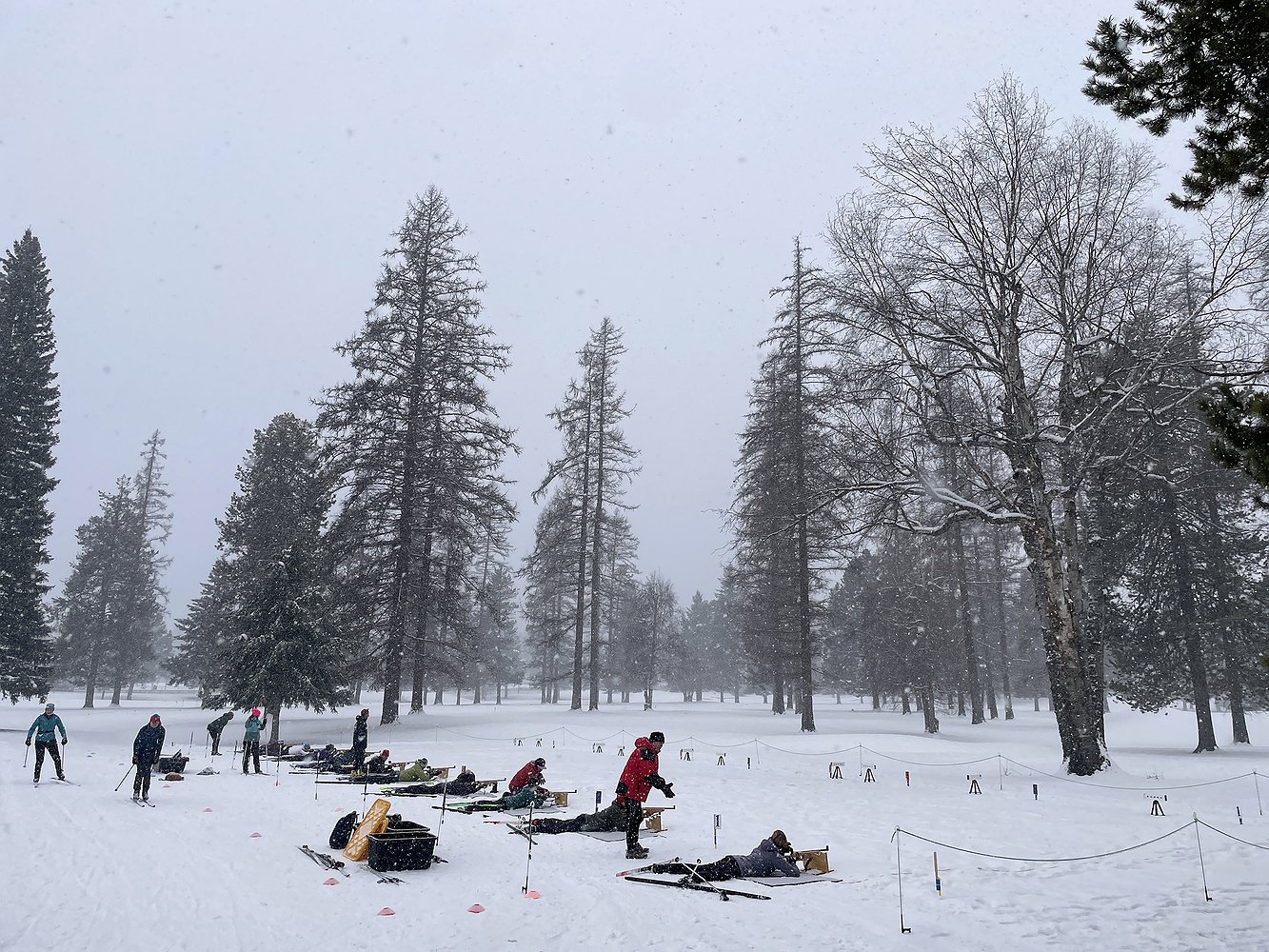 The shooting range of the biathlon course at Whitefish Lake Golf Course. (Photo provided by GNC)
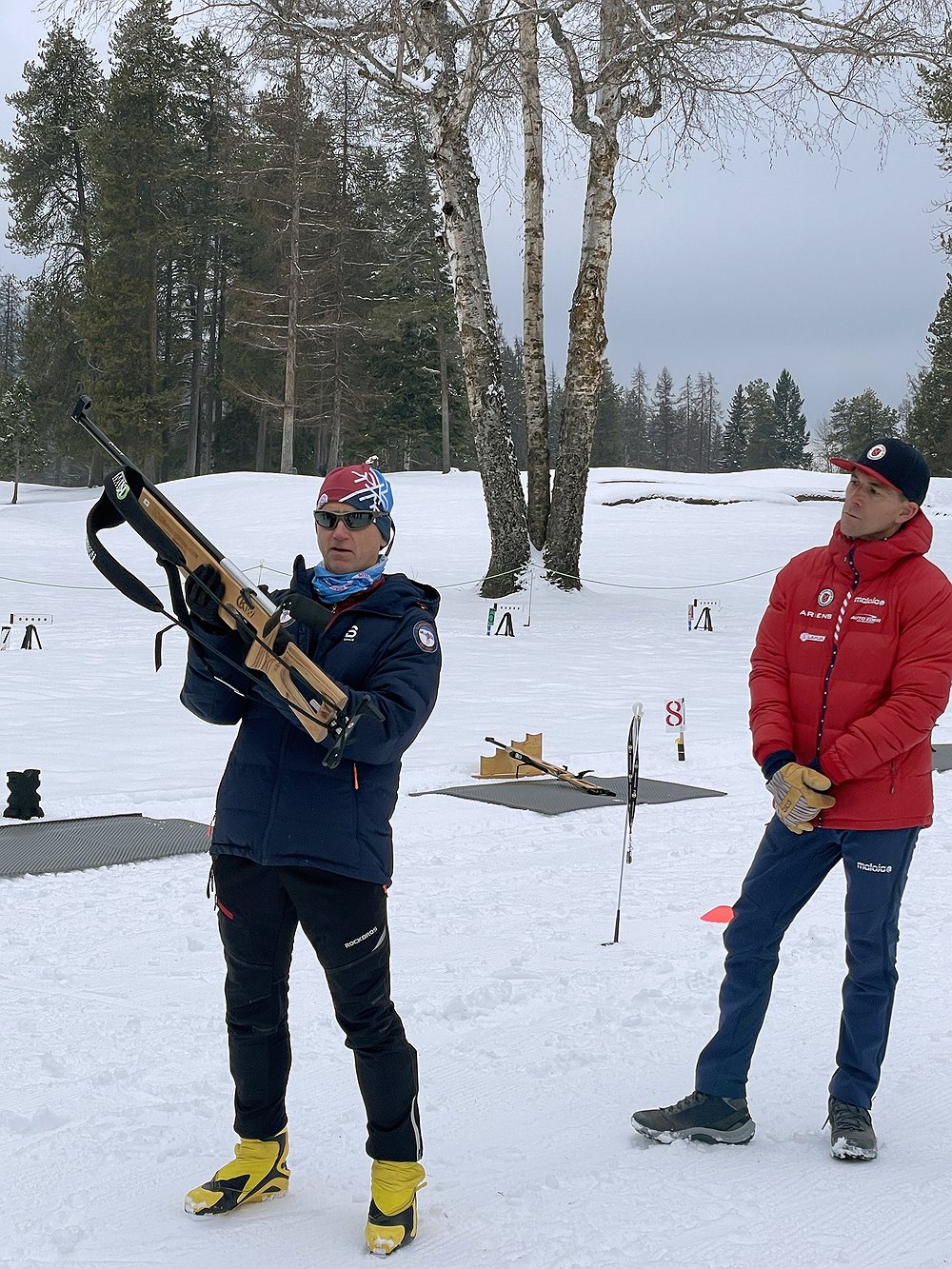 U.S. Biathlon Director of Sport Development, John Farra, (in the red jacket) watches as Glacier Nordic Club coach Ed Visnovske ,with a biathlon laser rifle, runs practice.
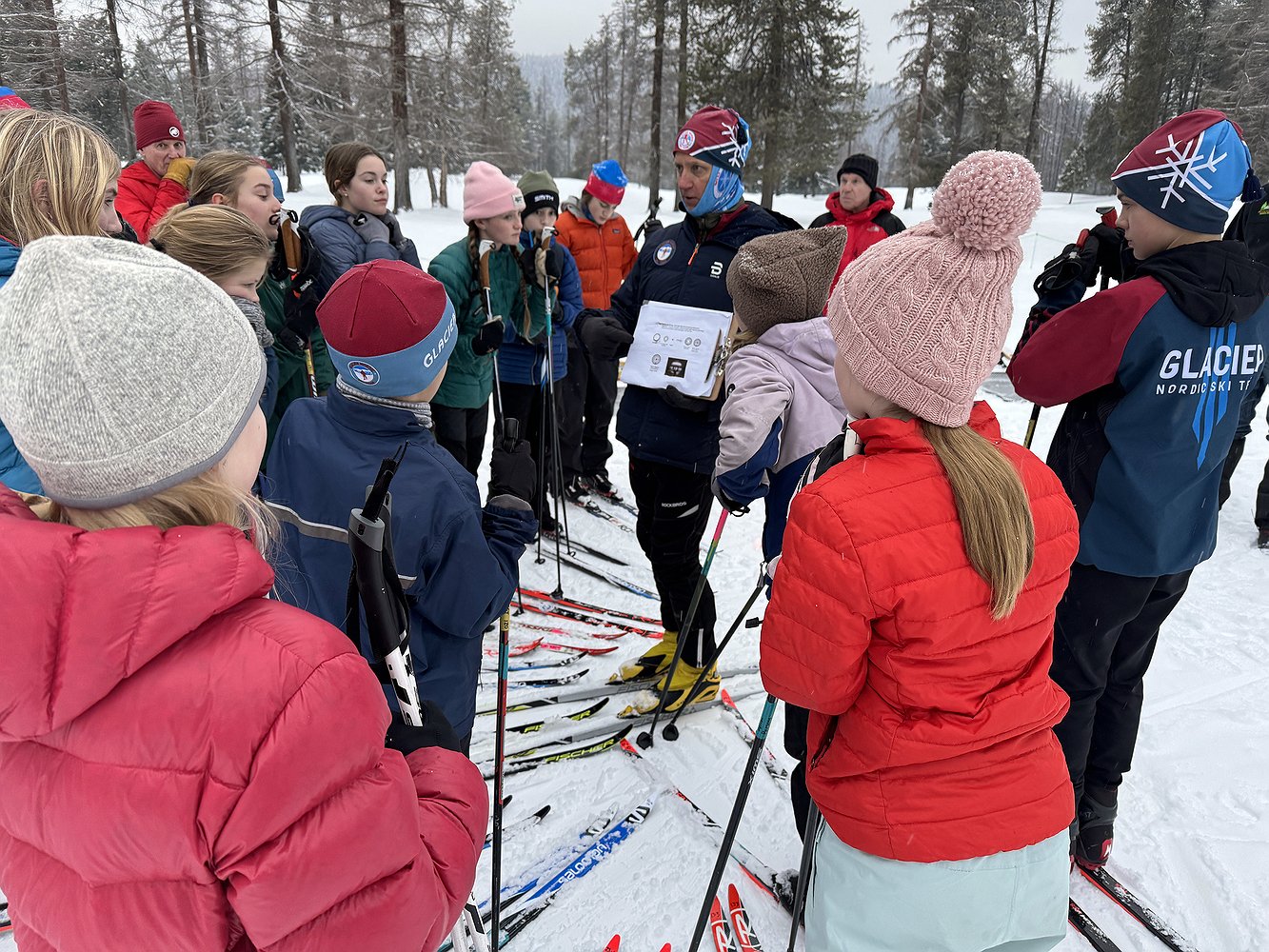 Biathlon competitors listen to Glacier Nordic Club coach Ed Visnovske at a practice session. (Photo provided by GNC).
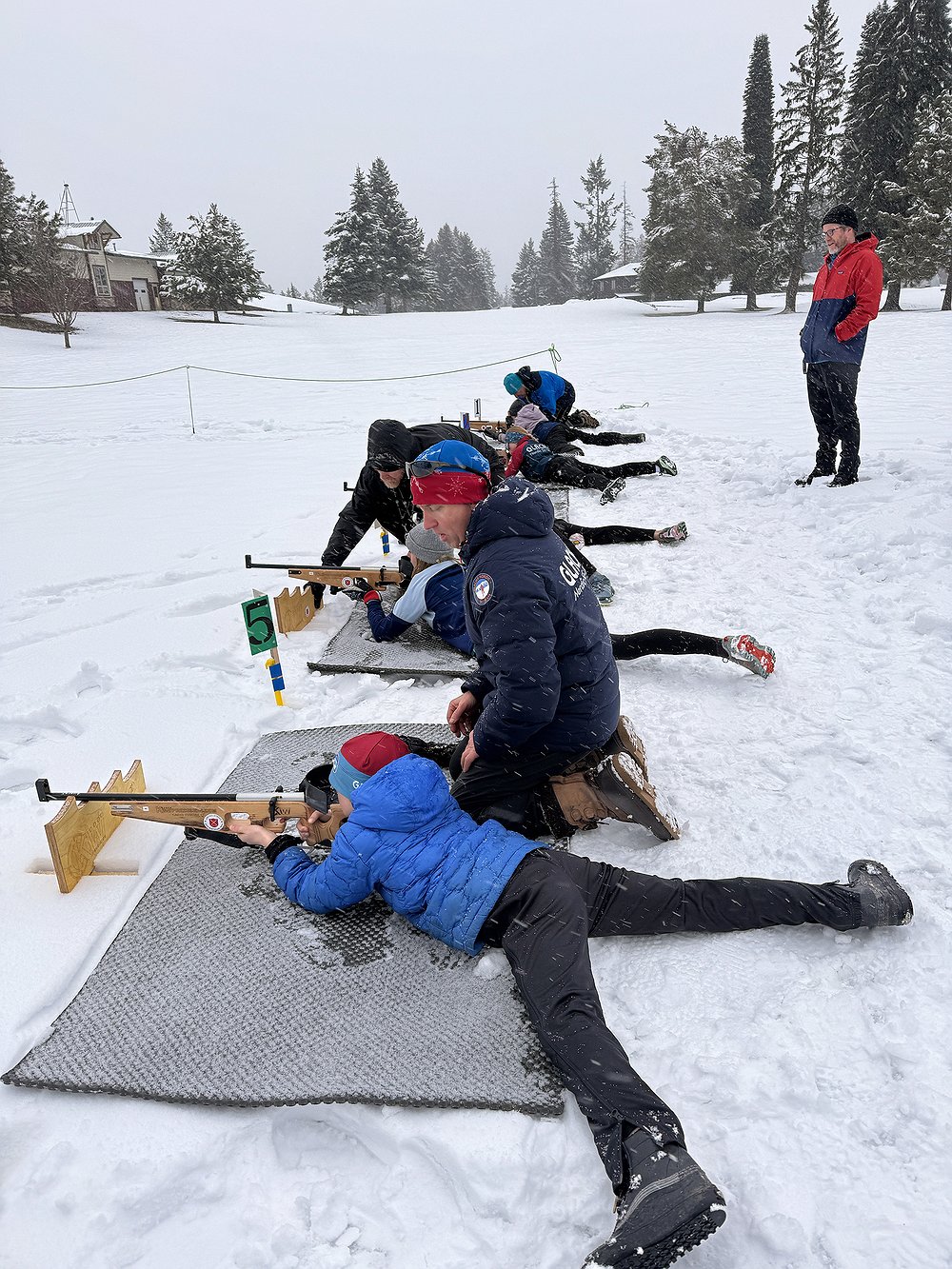 Young participants at biathlon proactice shooting fro the prone position with rifle supports. (Photo provided by GNC)
News Source : https://dailyinterlake.com/news/2025/dec/28/glacier-nordic-athletes-give-biathlon-a-shot-with-laser-rifles/
Other Related News
12/28/2025
Officials are moving forward with plans to thin a section of forest surrounding powerline...

12/28/2025
The Flathead Valleys streets sidewalks and transportation hubs have been buzzing with con...
12/28/2025
A snowboarder who went missing on the slopes at Whitefish Mountain Resort was found safe ...
12/27/2025
A 62-year-old Missoula man died in an early morning crash Friday Dec 26 near LibbyAccordi...

12/27/2025
Join Daily Inter Lake reporter Taylor Inman as she goes over the weeks biggest headlines ...

Follow


Download Our App


Copyright 2023 © Meet Montana. All Rights Reserved