

Published on: 01/27/2026


Description
Aquatic invasive species continued to spread in 2025 despite the best efforts of state wildlife officials.
Volunteers and biologists took 3,200 samples from more than 300 Montana waterbodies in 2025. The samples were analyzed for eDNA and other microscopic particles indicative of the bevy of invasive aquatic species that have descended on North America’s waterways in the past decades.
By the end of the year, state officials had catalogued about a dozen new occurrences of aquatic invasive species in the state.
Tom Woolf, the Aquatic Invasive Species Bureau chief for Montana Fish, Wildlife and Parks, said he wasn’t surprised to see samples from Salmon Lake test positive for the invasive faucet snail. Nearby waterbodies in the Swan Valley had already shown signs of the snail, and Woolf surmised that the lake, which sits just north of Clearwater, was already a lost cause.
Fragrant waterlily was detected for the first time in Middle Foy Lake, and two species of snail, one hailing from New Zealand and the other from Malaysia, expanded to lakes in eastern Montana.
All four species had been found in Montana previously.
BUT THE war against aquatic invasive species is far from over, said Woolf, and the best way to fight the incursion is to target the boats that ferry species from one waterbody to the next.
“They’re the alien spaceship that’s going to introduce them to the state, and we have to make sure we get them,” said Woolf at a Jan. 21 meeting of the Western Montana Conservation Commission.
The state wildlife agency partners with local organizations to operate 26 boat inspection stations across the state. Motorists traveling with a boat, including small personal vessels like a kayak or paddleboard, are required to stop at all open inspection stations they pass, so officials can search for signs of hitchhiking critters.
Of particular concern for inspectors are zebra and quagga mussels. Both species of mollusk hail from eastern Europe. In North America, where they have no natural predators, the mussels breed voraciously, often clogging drainpipes and damaging docks, boats and other infrastructure. Once established, they prove nearly impossible to eradicate.
Montana is one of only 10 states with no known occurrences of either species, according to data from the United States Geological Survey. DNA from invasive mussel larvae was detected in Tiber and Canyon Ferry reservoirs in eastern Montana in 2016, but both water bodies were delisted after years of monitoring turned up no additional signs of the mollusks.
Zebra and quagga mussels were found on 38 of the more than 120,000 vessels that passed through Montana check stations in 2025. That’s a low occurrence compared to previous years, when officials typically identified upwards of 50 mussel-fouled vessels, but Woolf said the decrease wasn’t indicative of a lessening threat.
“They’re getting closer and closer to here, and we’re getting more alarmed the closer they get,” said Woolf. “Our island is really shrinking here.”
The threat is compounded by differences in state regulations and prevention programs. While most western states operate some form of boat inspect program, the criteria vary and often fall short of Montana’s strict standards, said Woolf.
He recalled one boater that stopped at an inspection station in Southwest Montana last summer while heading to Whitefish Lake to participate in an annual festival showcasing wooden boats. The man told officials that his vessel had been inspected across state lines, but a thorough check revealed evidence of mussels lodged in some of the boat’s crevices.
Woolf categorized the interaction as a success story — officials scrubbed the boat of the invasive mussels, and the man even opted to launch a different boat at the festival to avoid any chance of an accidental introduction — but he worried about other vessels that state wildlife officials might miss.
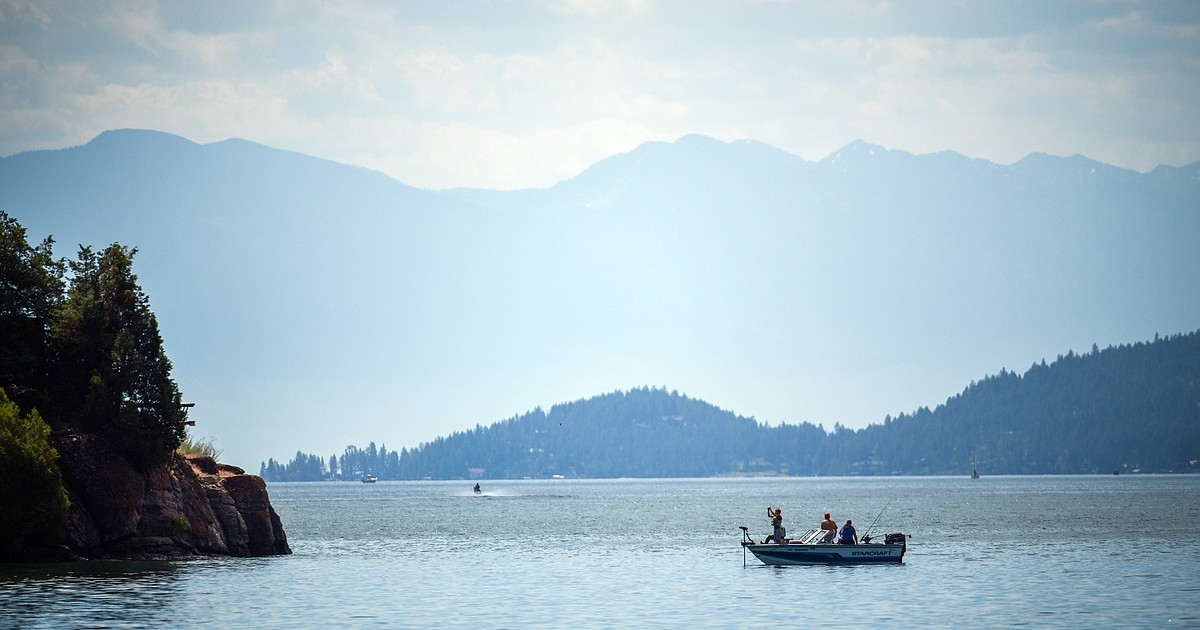
Officials interviewed 1,600 boaters on Flathead Lake last summer as part of an information gathering project. They found that 124 failed to meet inspection requirements before launching in the lake, including 49 boaters that had last launched out-of-state. Many of the other noncompliant boaters reported coming from nearby waterbodies, such as Lake Koocanusa.
All boats coming into the Flathead Basin are required to undergo an inspection prior to launching, even if they are coming from other areas in the state.
Woolf said the survey showed that the state’s inspection program still has room for improvement. The agency plans to install new signage at some stations to ensure passing motorists are aware of their obligation to stop. Several inspectors will also be added to the agency’s payroll to circumvent challenges caused by staffing shortages, and a new inspection station is slated to open near Eureka, providing more oversight for boaters in the northwest corner of the state.
THE IMPROVEMENTS are planned despite what Woolf described as upcoming funding challenges for the aquatic invasive species program. While state funding for the program is stable, several federal agencies have pulled support for the initiative.
Among them is the United States Army Corps of Engineers, which reduced its annual contribution to the state inspection program. The agency has historically provided the program with about $2 million per fiscal year.
Woolf said another chunk of money from the Bureau of Reclamation is unlikely to surface this year. Both federal agencies manage waterways in Montana as part of regular dam operations.
Funds from the U.S. Fish and Wildlife Service, which operates thousands of miles of wildlife refuges throughout the state, including important wetland areas, has also been delayed. Woolf said the agency typically contributes $80,000 to Montana’s aquatic invasive species program each year.
In light of the upcoming fiscal challenges, Woolf emphasized the importance of engaging communities in the effort to fight aquatic invasive species. Recreationists can document species they encounter through tools like the iNaturalist app, which Woolf said the Montana Natural Heritage Program regularly reviews to identify unusual or noteworthy sightings.*
Reporter Hailey Smalley can be reached at 758-4433 or [email protected].
*A previous version of this story erroneously stated that the Montana Heritage Center reviewed the iNaturalist app.
Other Related News

01/27/2026
HELENA Mont The Montana Department of Livestock MDL confirmed a case of Highly Pathogenic...

01/27/2026
A 25-year-old caught with a reportedly stolen car in Columbia Falls last year pleaded not...

01/27/2026
Advocates urged Flathead County commissioners on Monday to cut ties with immigration enfo...

01/27/2026
HELENA Mont Employees at the Helena Les Schwab Tire Center made sure a local family with ...

01/26/2026
ELLISTON Mont The Powell County Sheriffs Office PCSO is investigating a shooting incident...
Follow


Download Our App


Copyright 2023 © Meet Montana. All Rights Reserved